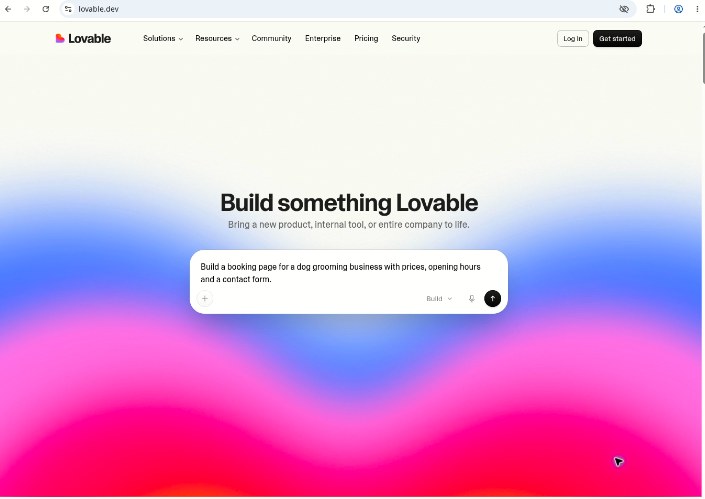
Lovable is an AI app builder. You describe what you want in plain English, and it writes a working web app: the pages, the buttons, the database and the login screen. You keep chatting to change things, and when it’s ready you publish it with a link or your own domain.
That changes who can sell software. A year or two ago, a small business that wanted a booking page or a client portal had to hire a developer. Now someone who understands the business problem and can describe it clearly can build a first version in an afternoon.
Below are 12 ways people are turning that into income, from quick freelance gigs to products that earn every month. I’ve ordered them roughly from fastest to set up to slowest.
What Lovable costs
Lovable runs on credits. Every message you send uses some, and bigger requests use more. As of mid-2026, the free plan gave you a few credits a day and limited public projects, and paid plans started at around $25 a month with custom domains, GitHub sync and a Supabase backend for user accounts and data, according to this June 2026 pricing breakdown. Check Lovable’s pricing page for the current numbers before you plan a client budget.
The free plan is enough to learn. Once you’re building for paying clients, the paid plan pays for itself with the first job.
Quick freelance income
1. Landing pages for local businesses
Plenty of plumbers, salons and personal trainers still have no website, or one that hasn’t been touched since 2016. Build a clean one-page site with their services, prices, reviews and a contact form, connect their domain and charge $300 to $800. With Lovable, the build takes a few hours. Most of the real work is getting good photos and words from the client.
If you’ve never built one, start by learning how to build a website with Lovable on a practice project for a friend’s business.
2. Simple calculators and quote tools
Businesses love tools that turn a visitor into a lead. A roofing company could use a “how much will my new roof cost?” calculator that asks a few questions and collects an email. A financial planner could use a retirement savings calculator. These are small, specific builds you can sell for $500 to $1,500, and you can reuse the structure for the next client.
3. Clickable prototypes for founders and designers
Founders raising money and designers pitching clients want to show something real, not slides. A working prototype built in Lovable feels like a real product. Charge for a fixed-scope prototype, such as three to five screens with fake data, delivered in a week.
4. Fixing stuck Lovable projects
This is a growing niche. Many people start an app in Lovable, get 80% of the way, then get stuck in a loop of errors they can’t fix. If you get good at debugging, reading the code and connecting Supabase properly, you can charge by the hour to rescue these projects. Look for them in Lovable’s community, on Reddit and in no-code Facebook groups.
Bigger client projects

5. Client portals for agencies and freelancers
Accountants, coaches and marketing agencies often share files and updates with clients over messy email threads. A simple portal where each client logs in to see their documents, invoices and progress is worth $1,500 to $5,000 to a busy firm. You can also charge a monthly fee for hosting and small changes.
6. Internal tools for small businesses
Many small businesses still run on spreadsheets that break: inventory, staff schedules, job tracking. Build a simple dashboard that does one job well, like tracking which van is at which job today. The business gets something easier than a spreadsheet, and you get a client who will need changes every few months.
7. MVPs for non-technical founders
People with a startup idea and no technical cofounder need a first version to test with real users. You can build that MVP, the minimum version that works, for a fraction of what a development agency charges. Be honest about limits. A Lovable MVP is great for testing an idea, but a fast-growing product may eventually need a developer.
Products that earn while you sleep
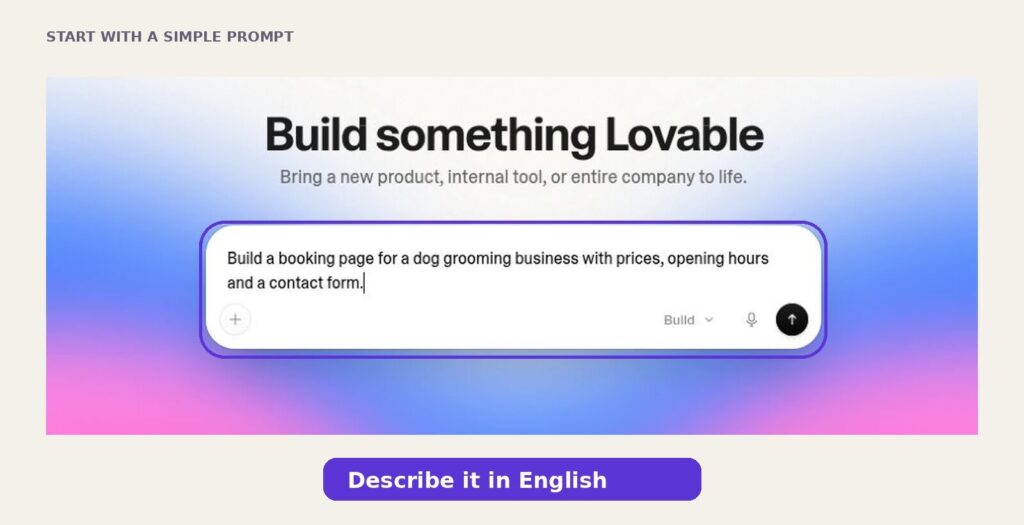
8. A small SaaS with a monthly subscription
This is the goal for most people who learn Lovable: build a tool that solves one problem for one group of people, and charge $9 to $29 a month for it. Good examples are narrow: a tool that turns a real estate agent’s notes into listing descriptions, or a scheduling page made for dog groomers. The narrower the audience, the easier the marketing.
The easiest place to start is a one-feature app you can build with Lovable for free. One feature, one audience, one price.
9. Niche directories
A directory lists businesses or resources in one niche, like “dog-friendly cafés in Austin” or “AI tools for teachers.” Lovable can build the listing pages, search and submission form. You earn from paid listings, featured spots, ads or affiliate links. Directories take time to grow because they depend on search traffic, so treat this as a slow build.
10. Clone a proven idea for a new market
Some of the best small software businesses copy an app that already works and rebuild it for a group the original ignores. A booking app built for salons in general could become one built for barbers, in a specific country, with local payments. It’s a well-tested approach, as long as you never copy anyone’s code or brand.
11. Build and sell small apps
Some builders make small apps, get them to a few paying customers, then sell the whole thing on a marketplace like Acquire or Flippa. Buyers pay more for apps with real revenue, even small revenue, than for ideas. Build it, run it for a few months, then sell it if you’d rather move on.
Teaching
12. Teach other people to use Lovable
Every new tool creates demand for people who can explain it. You can run paid workshops for small business owners, make a course, or sell a pack of tested prompts. If prompts are your thing, include an example result with each prompt, because that’s the format buyers respond to.
Tips that save you money and frustration
- Plan before you prompt. Write a short spec first: who uses the app, what screens it has and what each button does. Clear instructions use fewer credits than fixing a vague first attempt.
- Build one feature at a time. Asking for a whole app in one message usually produces a mess. Ask for the login, check it works, then ask for the dashboard.
- Use Claude or ChatGPT for planning. Write the spec in Claude or ChatGPT, then paste it into Lovable. The two tools work well together.
- Learn the basics of Supabase. Lovable uses Supabase for user accounts and data. I use Supabase for my own app’s backend, and knowing how its tables and permissions work makes you far better at fixing problems.
- Get paid before the final handover. Take 50% up front for client work and the rest before you transfer the project.
Lovable or another builder?
Lovable isn’t the only AI app builder. Bolt and Replit do similar jobs, with different strengths. If you’re choosing, try the free plans of Bolt and Replit before you commit. Many builders end up using two of them.
FAQ
Do I need to know how to code to make money with Lovable?
No, but it helps to learn a little as you go. You’ll fix problems faster if you can read the code Lovable writes and understand what a database table is.
How much can I charge for a Lovable website?
Simple one-page sites for local businesses usually go for $300 to $800. Client portals and internal tools with logins and data can be $1,500 to $5,000 or more. Price by the value to the client, not by the hours it took you.
Who owns the code?
On paid plans you can sync your project to GitHub, which gives you a copy of the code. Check Lovable’s current terms, and make sure your client contracts say who owns the finished project.
Start this week
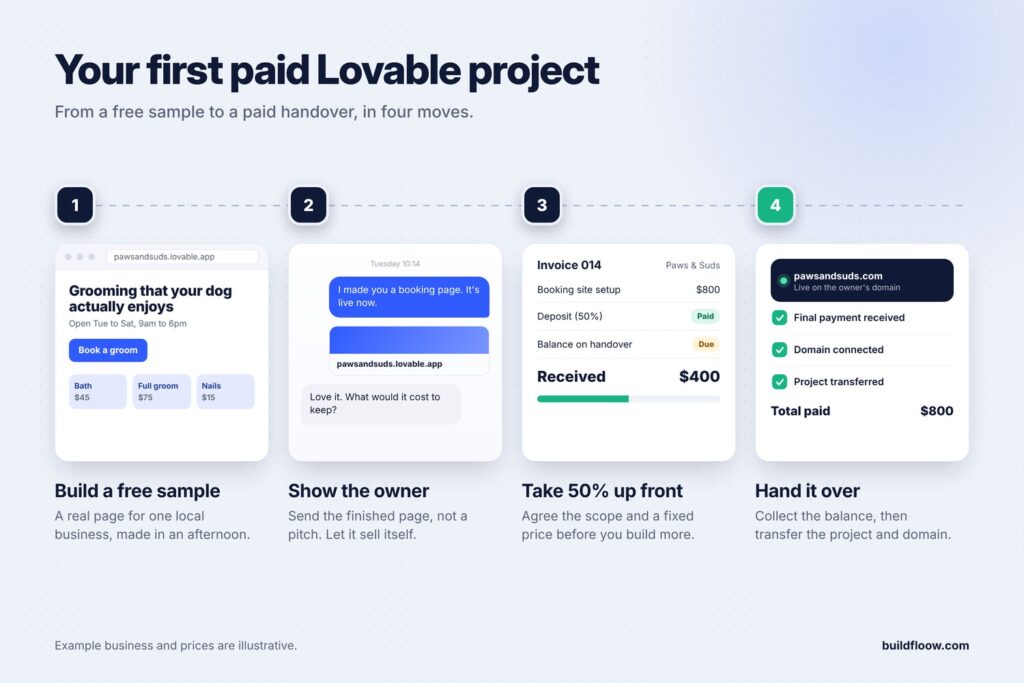
Pick one idea from the first section and build a free sample for a real business you know. Show the owner the finished page, not a pitch. Once you have one happy client and a real project to show, the rest of this list gets much easier. When you’re ready for bigger builds, small single-purpose apps, like a booking page or a habit tracker, are good practice projects.